

The Engine That Defined a Generation of Opels
When Opel introduced the cam-in-head (CIH) engine in the mid-1960s, it was a pragmatic answer to a hard problem: build something cheaper than a full overhead-cam design but freer-revving and more efficient than a traditional pushrod motor. The camshaft sat high in the head, working the valves through short rockers rather than long pushrods. That single decision shaped Opel performance for the next two decades.
From the Kadett to the Monza
The CIH family grew from small fours into the big 2.5 and 3.0 litre sixes, finding homes in the Ascona, Manta, Rekord, Commodore and eventually the Monza. The architecture stayed recognizable across the whole range, which is exactly why parts, knowledge and tuning tricks crossed so easily from one model to the next. A builder who learned the engine in a Manta already understood most of what sat in a Monza.
Why Builders Still Reach for It
1. It responds to simple tuning.
Cams, carburettors, headers and compression changes all produce honest, predictable gains. The CIH rewards careful work rather than exotic parts.
2. The parts interchange is generous.
Because the family shared so much across models and years, sourcing heads, cranks and ancillaries is far easier than it looks for an engine this old.
3. It takes fuel injection well.
Swapping to Bosch L-Jetronic or LE-Jetronic is one of the most common and worthwhile upgrades, and the head responds cleanly to the better fuelling.
4. It tolerates boost.
With sensible compression and good fuelling, the bottom end is sturdy enough for moderate turbocharging, which is why turbo CIH builds keep appearing.
5. It pulls like a classic should.
The long-stroke sixes in particular deliver the kind of low-down torque and mechanical character that no modern engine quite replicates.
What Makes the CIH Distinctive
- Cam-in-head layout: valves driven by short rockers, not pushrods, for better breathing than its rivals.
- Long service life: simple, robust internals that handle decades of use when maintained.
- Wide displacement range: from frugal fours to torque-rich 3.0 sixes on one basic design.
- Carb or injection: happy on Solex or Weber carburettors or Bosch electronic injection.
- Cross-model parts: components shared across Ascona, Manta, Rekord, Commodore and Monza.
Living With a CIH Engine Today
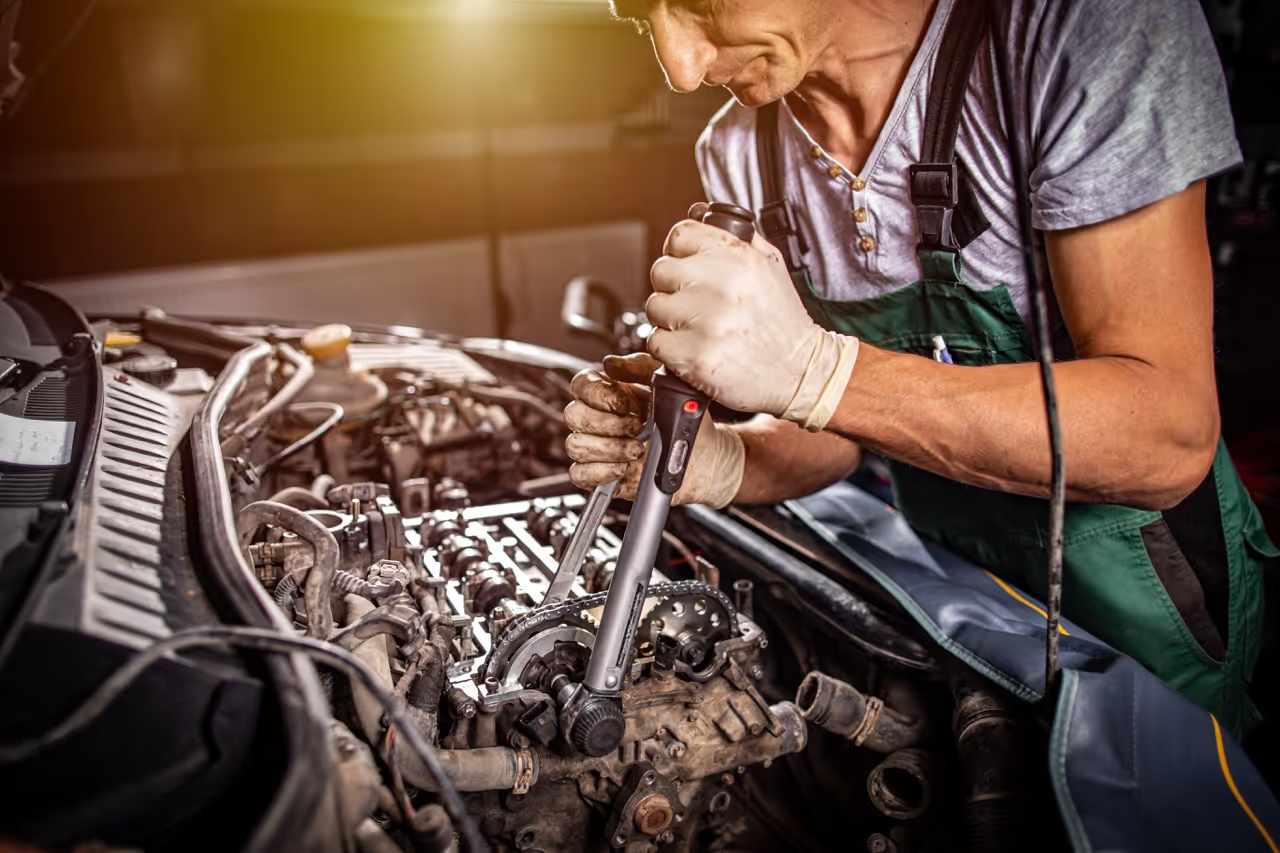
- Mind the timing chain: tensioners and guides wear, and a rattle at startup is the warning sign.
- Watch the cooling system: the big sixes run hot if radiators and water pumps are tired.
- Keep the head torque in check: gaskets last when the head is torqued correctly and checked again after running in.
- Source parts early: some trim and ancillary items are getting scarce, so buy when you find them.
The Bottom Line
The CIH engine is the thread that ties the rear-wheel-drive Opel world together. Understand it once and you understand the Ascona, the Manta, the Commodore and the Monza all at the same time - which is exactly why it remains the heart of so many builds today.
Built right, a CIH still has plenty left to give.
Building an Opel? Join our SMS list for updates.

Reference for the Opel building community.

