Suspension, Brakes & Chassis Geometry
GT brake upgrades, Monza rear-link geometry, alignment after lowering, and proportioning, with figures builders reuse.
Browse reference areas
Browse reference areas


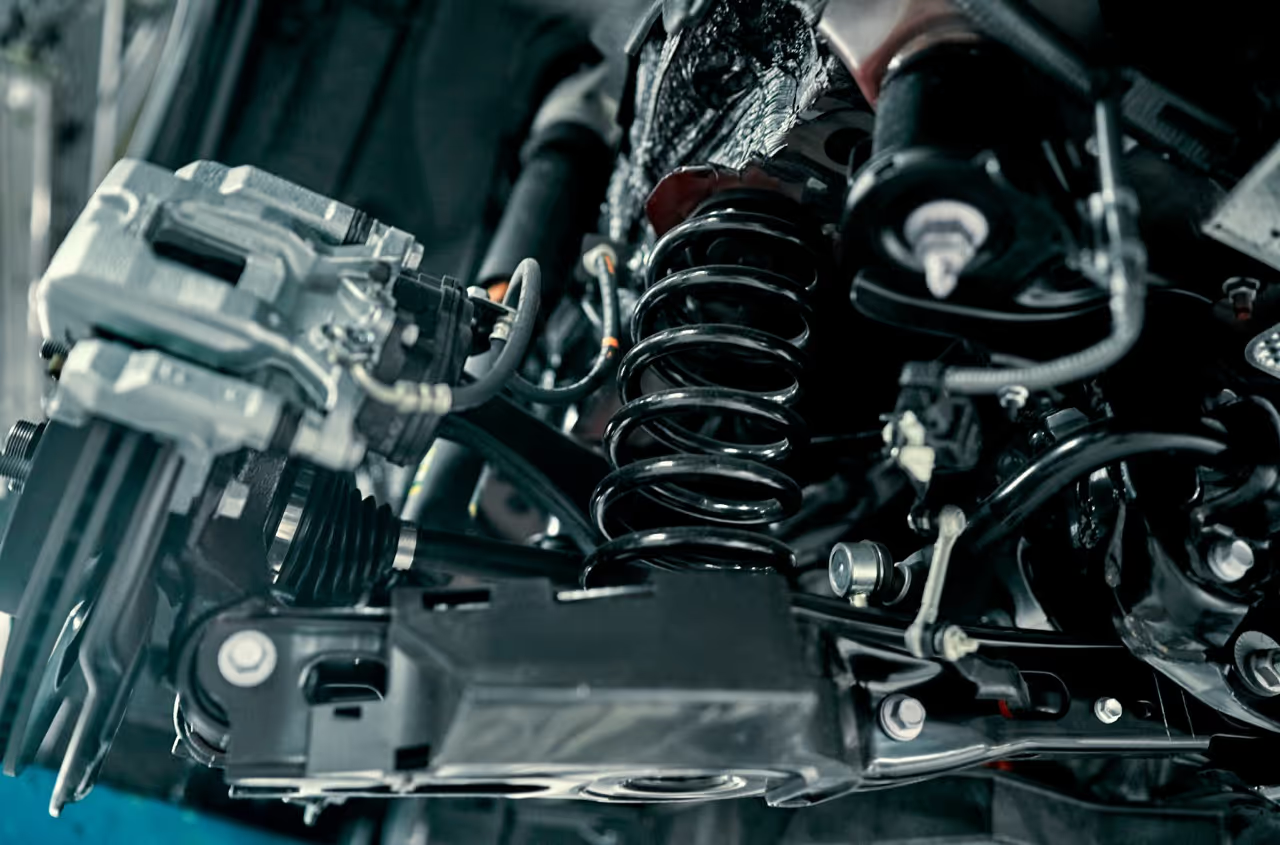
Opel Tuners publishes setup and reference geometry for Ascona, Manta, Monza, and GT builds, the figures and procedures builders cite when they change ride height, upgrade brakes, or correct rear-link angles after a torque-tube or spring swap. This pillar is not a catalogue of parts; it is the reasoning chain from factory baseline to a car that stops straight, turns predictably, and does not eat tyres because the rear axle is fighting the floor pan.
Chassis work on these platforms is cumulative. A brake upgrade changes front weight transfer; a lowered spring changes roll centre and bump steer; a torque-tube modification changes pinion angle and effective wheelbase. The articles here are written to be read in that order when you are mid-build, with links woven into the prose rather than bolted on as an afterthought.
The Opel GT Brake Upgrade article is the anchor for the GT platform: caliper and disc options that fit under the factory wheels you actually run, master-cylinder bore matching, proportioning valve behaviour, and pedal feel notes that matter on a light car with a long pedal travel history. GT builds often combine modern tyre width with period-correct aesthetics, the reference stresses measurable outcomes (pedal effort, fade resistance, pad compound temperature range) over brand names.
Before you buy the largest rotor that fits, confirm hub register, wheel offset, and tie-rod clearance at full lock. Many GT owners discover interference only after powder coat. Match the master cylinder to caliper piston area; an oversized master reduces pedal travel and can make modulation impossible on a short-wheelbase car.
When you increase front grip, revisit rear brake balance and tyre compound. A front-biased upgrade on a light rear end can provoke rear lock-up in wet conditions if the proportioning valve is still calibrated for drums or small rear discs.
Monza Rear Geometry documents link angles, ride height targets, and handling balance for the live-axle rear common to Monza and related RWD layouts. The Monza is sensitive to combined changes: lowering without recalculating anti-squat and roll steer, or fitting stiffer rear bushings without checking pinion angle, produces understeer or hop that feels like “bad shocks” but is pure geometry.
Measure ride height at a defined loaded condition fuel, driver, tools you carry and record toe, camber (where adjustable), and thrust angle relative to the tunnel. Photograph link positions at ride height, not on jack stands, because the torque-tube layout changes effective link angle as soon as the axle loads.
Cross-read with Drivetrain & Gearing when you change effective wheel diameter or move the axle with adjustable links; gearing and geometry errors together show up as chronic tyre wear on one edge only.
Restoration-grade shell work changes alignment reference points. The body shell restoration notes linked from many Opel club resources are worth reading when subframe mounts, tunnel stiffening, or rear crossmember repair altered your datum planes. You cannot align a car whose rear mount shims are compensating for structural twist.
On cars with significant rust repair, complete a static diagonal check (string box or laser cross) before you spend money on adjustable top mounts. Otherwise you are tuning around a bent reference.
Period Opels shipped with brake technology that was adequate for narrow tyres and lower cruising speeds. Modern traffic and tyre compounds demand reconsideration of disc size, pad friction, fluid boil point, and ducting. The reference archive treats brakes as a system: pedal ratio, booster (if fitted), master cylinder, lines (flex vs steel), caliper stiffness, disc hat ventilation, and pad backing stiffness.
Fluid maintenance is editorially boring and practically critical. Dot 4 with regular flush intervals prevents moisture-induced pedal fade on long downhill sections relevant on mountain roads where GT and Manta owners actually drive.
For platform comparisons and historical context on Ascona-family cars, builders sometimes use broader summaries such as Opel Ascona background material when explaining model-year suspension differences to a shop that only sees one Opel per decade.
Lowering without spring rate and damper travel matching is the most common way to ruin a Manta or Ascona street car. Record free length, installed length, and corner weight if possible. A stiffer spring on a short travel damper produces harshness and loss of mechanical grip on broken B-roads exactly where these cars are driven in Europe.
Bump stops must engage before metal-to-metal; cut bump stops are not a “track mod” on public roads. Check damper shaft speed behaviour: too much low-speed compression makes the car skip over mid-corner bumps; too little high-speed control lets the axle hop on throttle in second gear.
McPherson strut cars in the Opel RWD family share habits: bush compliance defines caster feel, worn inner ball joints mimic alignment drift, and offset bushings can fix camber after lowering if the top mount has limited adjustment. Always torque bushings at ride height if the procedure calls for it tightening at full droop preloads the rubber and tears it within months.
Steering rack play and tie-rod ends must be below tolerance before alignment; otherwise you are documenting numbers that change every lap. Replace flex joints in the column if you feel notch centre injection swaps and exhaust work often disturb the column and hide play.
Regional part numbers and link dimensions differ between markets. When a German forum quote does not match your UK car, use the international Opel link roundup and the Manta B link directory to find market-specific diagrams. EFI and chassis projects overlap when ride height changes exhaust clearance see Fuel Injection & Engine Management if you moved manifolds or engine position.
1 — Structural and bushing baseline. Fix mount points, replace cracked bushings, confirm steering wear is gone.
2 — Ride height and corner weight. Set target height with loaded condition; note diagonal if you have scales.
3 — Alignment at ride height. Toe, camber, caster (where applicable), thrust angle; document before test drive.
4 — Brake hydraulic and mechanical upgrade. Bed pads per compound instructions; re-check balance on a quiet road.
5 — Driveline angle check. After any rear link or spring change, verify pinion angle — detailed in Torque-Tube & Gearbox Reference.
Open Reference Areas for the full pillar map, or continue to Drivetrain & Gearing when your next change is ratios, not ride height.
Each Opel RWD platform shares CIH engine heritage but differs in subframe, rear link layout, brake options, and tunnel clearance. Document which platform you are building before you copy a forum thread from a different model year a Manta five-speed tunnel relief pattern does not automatically fit an Ascona without measurement.
Weight distribution changes when you move battery, fit larger brakes, or add intercoolers. Revisit spring rates and damper travel when those moves happen in the same season as chassis work, not a year later when tyre wear looks mysterious.
When explaining project scope to machine shops, point them at platform summaries such as Ascona background material so they understand why your car does not share parts with the BMW they see every week.
Photograph alignment sheets, link positions at ride height, and brake pad bed-in notes in the same folder as ratio calculations. Future you will not remember which shim corrected thrust angle. The archive is written assuming builders maintain that discipline the text cannot replace your measurements on your car.
Modern tyre widths change scrub radius and effective camber gain. A wheel that clears the arch static may rub on bump under braking. Document wheel spec, spacer thickness, and stud engagement the GT and Manta communities see more failures from hardware than from alignment math.
Track setups that lower rear roll stiffness without matching front bar changes produce terminal understeer on a live axle car. Street setups that soften rear too much create squat and axle steer on throttle. The reference articles bias toward repeatable street manners with occasional track use, not dedicated race cars with splitters and slick-only compounds.

Reference for the Opel building community.

